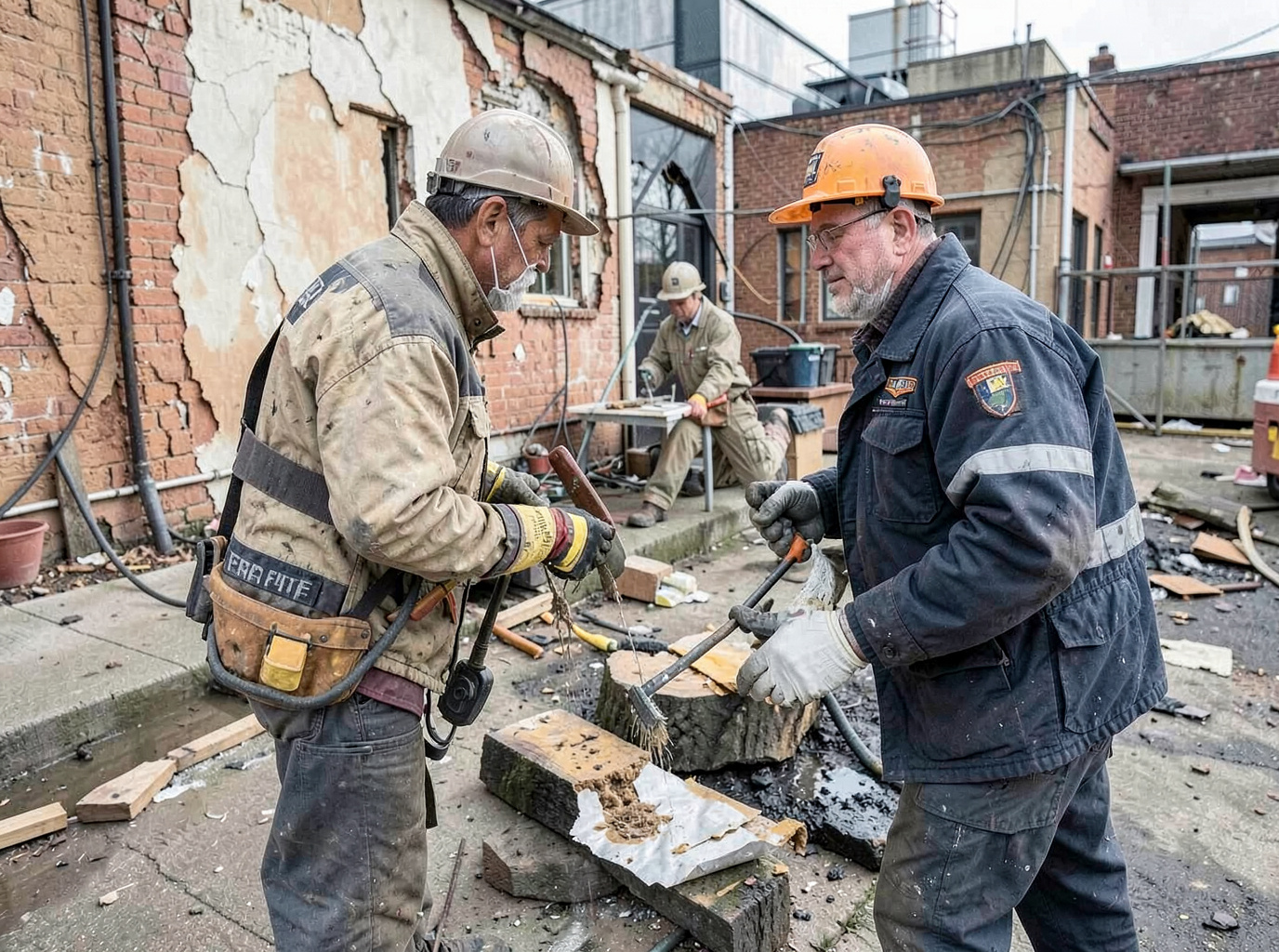
Milwaukee's housing stock in neighborhoods like the East Side, Third Ward, and Washington Heights often features plaster walls, hardwood floors, and balloon framing from the early 1900s. Smoke from a structure fire travels through these cavities and settles into porous materials, requiring removal of affected lath and insulation rather than surface cleaning alone. Cold winters with snow cover limit exterior access and force crews to work around frozen vents and heating systems that can re-circulate odors.
In Riverwest and Walker's Point, many two-flats and duplexes share walls, so fire damage frequently crosses property lines and demands coordination with adjacent owners. Warm humid summers increase the risk of secondary mold growth once water is introduced during suppression, so dehumidification must begin immediately after soot removal. Crews also contend with Lake Michigan moisture that slows drying in basements common to Bay View and Shorewood properties.
Content cleaning must account for items stored in unheated Milwaukee garages or attics where temperature swings during winter can set smoke odors permanently into fabrics and electronics. Electrical systems in pre-1950 homes often contain knob-and-tube wiring that requires careful inspection before any power is restored.
Technician insight
In Milwaukee, the thing that catches most people out with fire damage restoration is how quickly smoke penetrates balloon-framed walls in homes built before 1940, especially when a winter fire forces the furnace to run and push odors into every unit of a duplex.
Bay View Duplex Kitchen Fire
Smoke from a cooking fire traveled through shared walls into the upstairs unit. We found heavy soot in plaster cavities and HVAC returns. Containment and cavity cleaning stopped odor migration before winter heating resumed.
Fire Damage Restoration Services We Offer
✓Soot Removal From Plaster and Wood
Removes embedded soot from lath-and-plaster walls and hardwood floors common in Milwaukee's pre-war homes without damaging original surfaces.
✓Smoke Odor Neutralization
Treats HVAC systems and wall cavities to stop odors from returning when furnaces restart during cold Milwaukee winters.
✓Kitchen Fire Cleanup
Cleans grease and protein-based soot that bonds to cabinets and ceilings after cooking fires typical in older East Side and Wauwatosa kitchens.
✓Content Cleaning and Salvage
Processes clothing, documents, and electronics affected by smoke in homes near the Lakefront where humidity accelerates corrosion.
✓Structural Drying After Suppression
Uses targeted drying in basements and shared walls of duplexes in Riverwest and Walker's Point to prevent mold after water used on fires.
Fire Damage Restoration Cost in Milwaukee, WI
| Service | Typical Range | What Affects It |
|---|---|---|
| Initial Assessment | Free | Includes inspection of affected Milwaukee home and written scope. |
| Soot Removal | $800–$3,500 | Depends on square footage and materials such as plaster versus drywall. |
| Odor Neutralization | $400–$1,200 | Higher when HVAC or multiple floors are involved. |
| Content Cleaning | $300–$1,800 | Varies by item count and smoke type. |
Ranges are typical for Milwaukee, WI and confirmed with an exact written quote before any work starts.
How it works
- 1
Site Assessment
Inspect all affected rooms, HVAC runs, and adjacent units in Milwaukee duplexes to map smoke migration paths.
- 2
Containment And Safety
Isolate work zones with barriers and negative air to protect neighboring properties in dense neighborhoods like the Third Ward.
- 3
Soot And Residue Removal
Clean surfaces and cavities using methods suited to plaster, brick, and wood found in Milwaukee's older stock.
- 4
Odor Treatment And Drying
Apply neutralizers and dehumidifiers while monitoring for winter condensation issues.
- 5
Final Clearance
Test air quality and surfaces before returning the property for occupancy.
Pricing
Pricing varies by fire size, number of rooms affected, and whether shared walls or HVAC systems require extra work.